

Green City Clubs: Empowering young environmental leaders in schools across Musanze district.
In October 2025, Partners For Conservation was commissioned by the World Resources Institute to conduct a consultancy assignment on Establishing 10 Green City Clubs and Planting 10,000 Trees pilot project across ten schools in Musanze district as a second city. The initiative aimed to strengthen environmental stewardship among young people while contributing to Rwanda's Green City Vision.
The project main objective was to establish ten Green City Clubs and plant 10,000 trees across participating schools,. By combining environmental education with practical conservation, the initiative empowered students to become active participants in creating greener and more sustainable communities.
During the first phase of the project, a total of 10,000 trees were planted, comprising 72% agroforestry trees, 3% fruit trees, and 25% native tree species. Before the closure of the first phase, a Monitoring, Reporting, and Verification (MRV) exercise was conducted, which revealed a tree survival rate of 93%.
Upon the completion of assignment, PFC accommodated the project results into its strategies to ensure the sustainability and the high rate of survival, and to move forward various actions were engaged. It is against this, that trainings of GCC members were organized.
Training students and teachers for environmental action
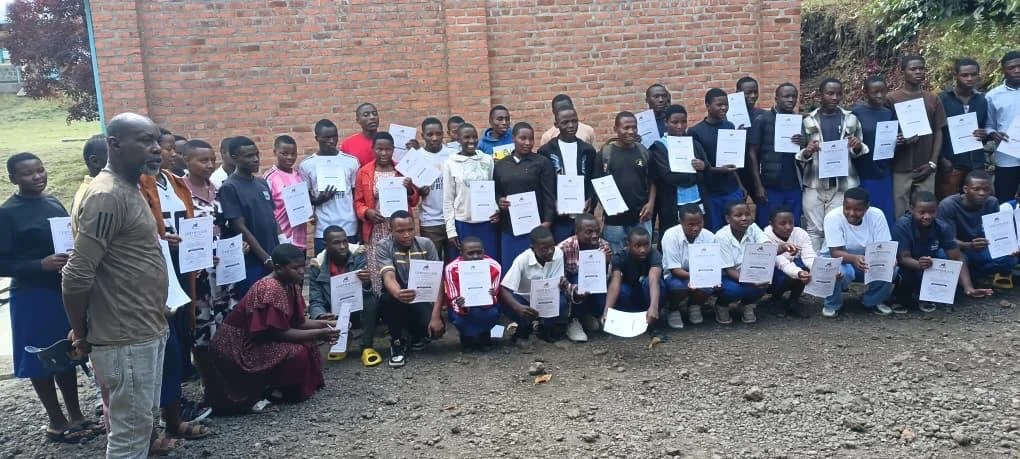
Following introductory briefings with school leaders and teachers, PFC conducted the first phase of Green City Clubs training from 23 to 25 July 2026. Participants came from five schools: GS Kivumu, GS Ruhehe, TSS Mutobo, GS Kabushinge, and GS Kamisave.
The training introduced participants to Green City Club Education Package, using interactive presentations, group exercises, and project-planning sessions to explore climate change, biodiversity conservation, waste management, ecosystem restoration, urban greening, and environmental leadership.
Beyond raising awareness, the training encouraged students and teachers to identify environmental challenges within their schools and surrounding communities and consider practical solutions. Participants also selected flagship project ideas that will guide the next phase of the initiative. The remaining five schools were scheduled to participate in a subsequent training session.
Training results
The first phase established a foundation for student-led environmental action. Key results included:
Participants trained: A total of 388 students (75% of members) were trained, including 226 girls,162 boys, and five teachers reflecting balanced engagement.
Knowledge and skills gained: The key learning outcomes were to enhance students’ and teachers’ knowledge of climate change, biodiversity conservation, waste management, ecosystem restoration, and urban greening; strengthen students’ leadership and practical skills in environmental conservation; and equip them to implement school-based environmental projects, promote tree planting, and raise environmental awareness among fellow students and surrounding communities.
Flagship projects selected: After the training, each school selected a flagship project based on its priorities and interests. GS Ruhehe, GS Kamisave, and GS Kabushinge selected tree nursery projects, while TSS Mutobo chose a biogas project. GS Kivumu selected a waste management project. These flagship projects aim to encourage students to apply their environmental knowledge through practical, school-based conservation activities.
Commitments made: Participating schools and Green City Club members committed to implementing their selected flagship projects, maintaining and protecting planted trees, mobilizing fellow students to participate in environmental activities, and working with teachers and PFC to ensure project sustainability.
Next Steps: turning ideas into actions
Upon completion of training, GCC members expressed their commitment to the project by voting for projects that they believe will keep their schools but particularly their clubs attached to the project.
To support the above commendable initiatives, PFC organized field visits to each Green City Club to work directly with students and teachers on developing their selected flagship projects. These visits will help assess school-level environmental challenges, refine project ideas, and ensure that proposed initiatives respond to local needs.
The project-development process focused on the follow five practical steps:
Environmental assessment: Identify priority environmental challenges and opportunities within each school and its surroundings.
Project conceptualisation: Refine the selected flagship idea, define the problem it addresses, and identify intended environmental benefits.
Action planning: Establish activities, responsibilities, timelines, and resource requirements, including a preliminary budget where appropriate.
Monitoring and evaluation: Define simple indicators to measure progress, such as trees planted and surviving, waste managed, or students engaged.
Validation and implementation preparation: Review each project with club members, teachers, and school leadership and identify potential partners and sources of support.
PFC plans to work with schools whose students were not part of the 1st training cohort to organize the 2nd cohorts
Building a greener future through youth leadership
Through the Green City Clubs initiative, PFC and its partners aim to strengthen the role of schools as center of environmental learning and action. The forthcoming field visits will help transform classroom learning into practical projects while building students' leadership, problem-solving, and project-planning skills.
PFC believes that young people should not only learn about environmental challenges but also have the knowledge, capacity, and opportunity to develop and lead solutions.